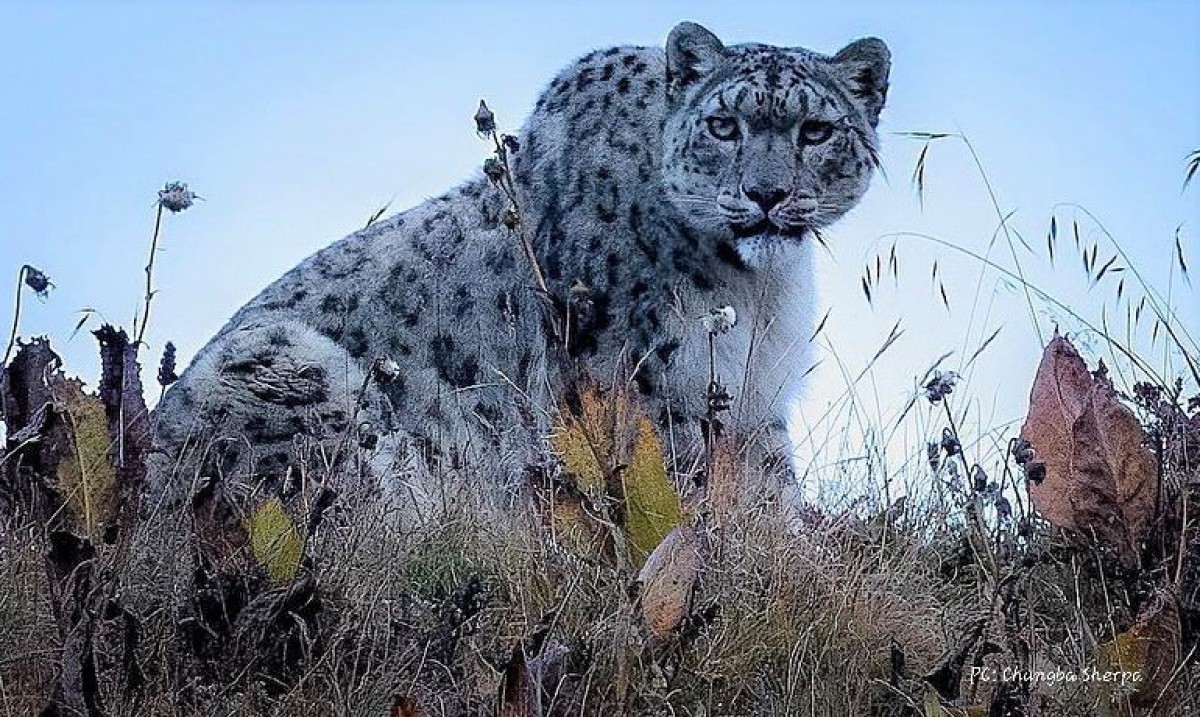
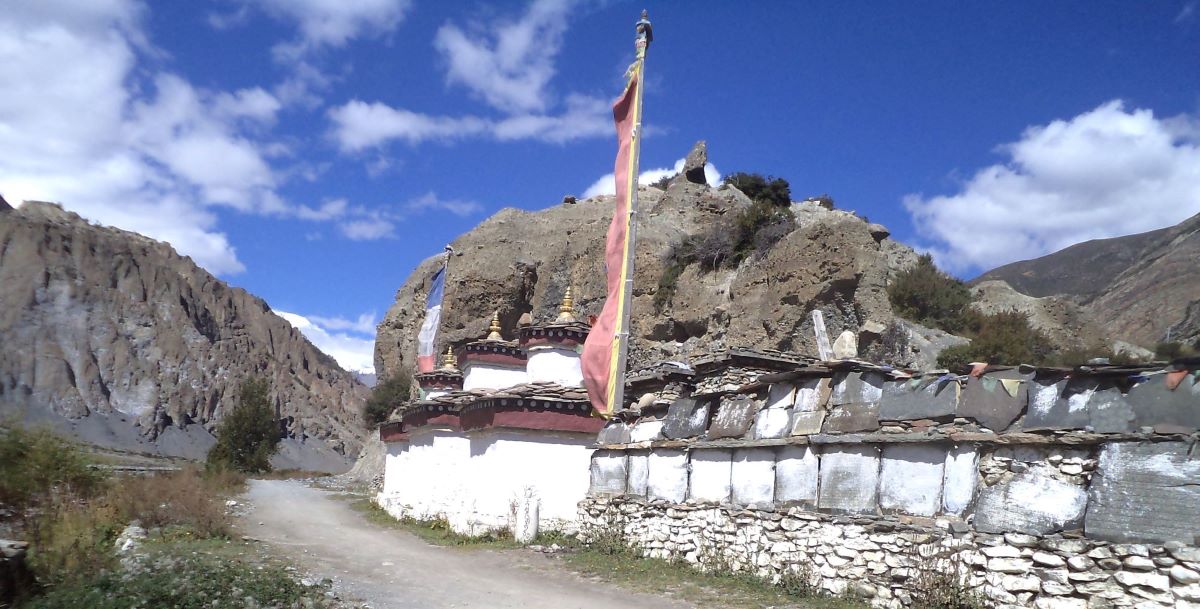
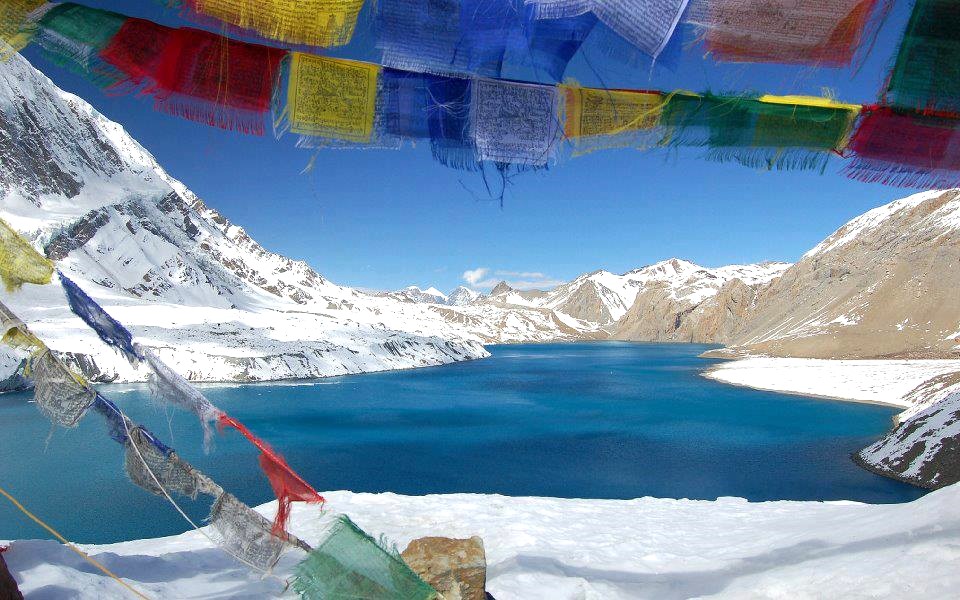
Himalayan Ghost -snow leopard, scenic helicopter flights between Annapurna and Manaslu Himalaya range, wonderful landscapes, Gangapurna glacial lake, highest lake Tilicho, hanging icefalls, serene numerous peaks in Annapurna and Manaslu greater Himalaya range, hanging cliffs, monasteries and maniwalls, traditional Tibetan Gurung villages, typical mountain lifestyle and farming of Himalayan wheat and potato, yak, sheep and horse herding, herds of blue sheep, Himalayan griffin vulture, Nepal’s national bird Danfe etc.
Day 01: Arrive Kathmandu, hotel
Arrive Kathmandu, after customs formality, meet the local staff, transfer to hotel, dinner and overnight.
Day 02: Kathmandu-Manang by helicopter/explore Manang village
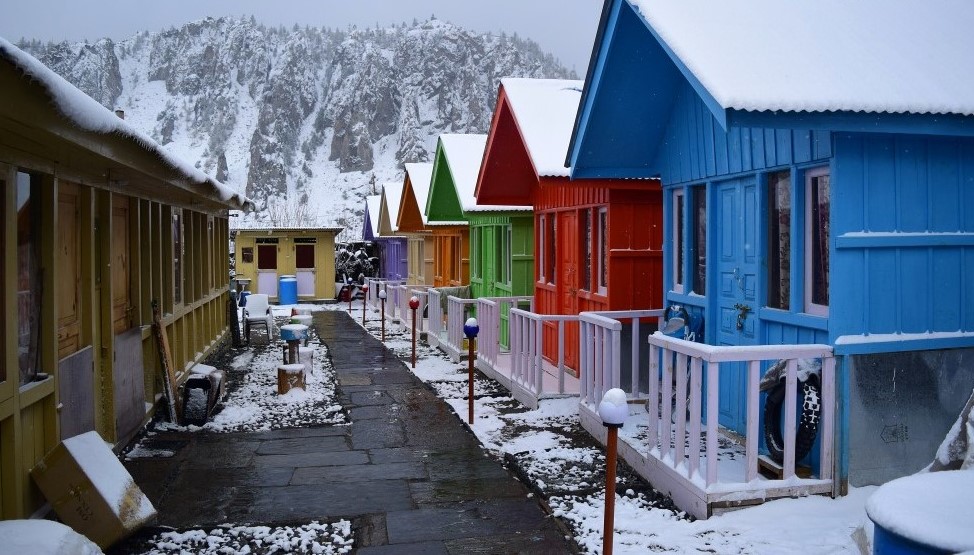
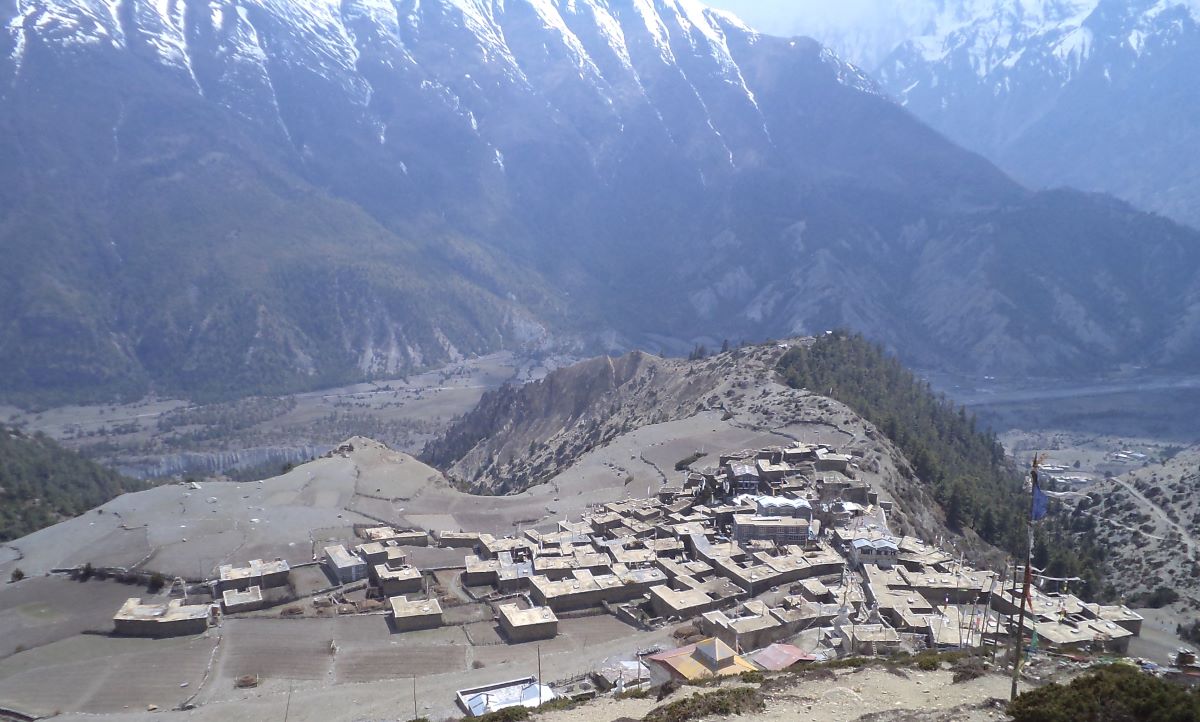
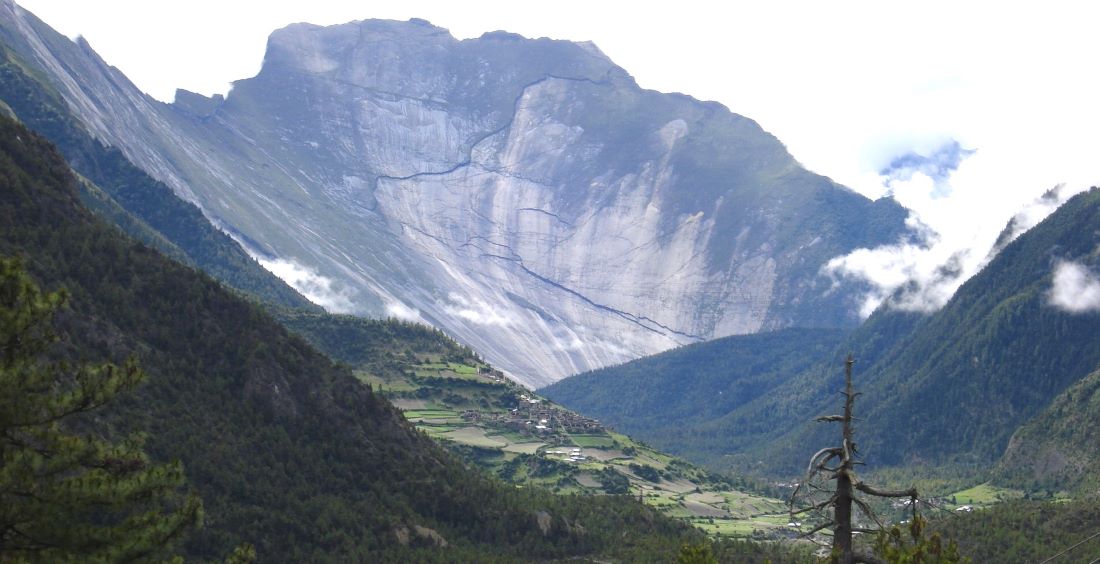
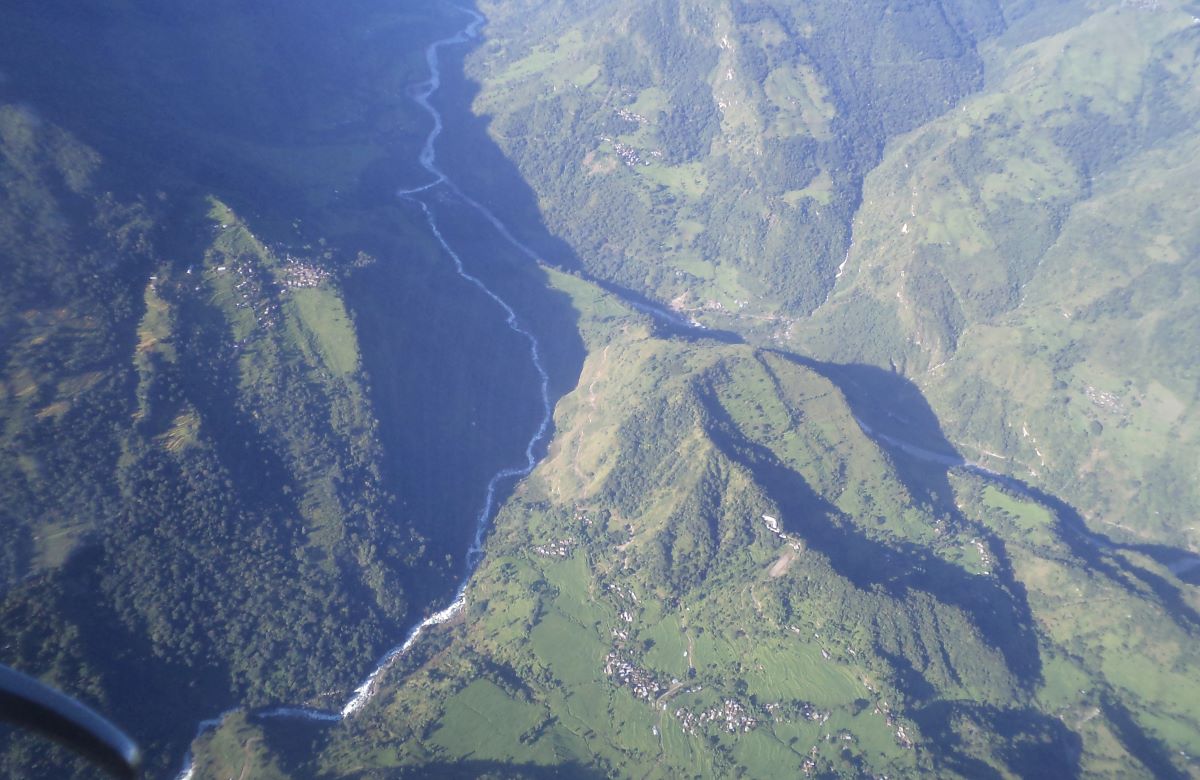
After breakfast, transfer to airport, fly to Manang 3440m by helicopter, very scenic helicopter flight flies over Marsyangdi River valley between 2 giants greater Himalaya ranges (Annapurna and Manaslu) over 8000m, check in guesthouse, Hotel Mountain Lake or any best one. Explore typical Manang village, visit monastery, Gangapurna glacial lake and one of the oldest villages in the Himalaya, Braga village and monastery.
Day 03-07: Explore Snow Leopard, its prey species and more
Snow leopards have active movement at dawn and dusk. So, it is better to leave hotel early. Have early breakfast, If needs, we take pack lunch with us. Hike about 2 to 3 hours to the snow leopard sites then spend time to explore snow leopard, its prey species like blue sheep, Himalayan Tahr, marmot, rabbit, pika, deer etc and other Himalayan flora and fauna. Average hike per day may be about 5 hours both ways (hotel to site and back to hotel), rest day for exploring…
Day 08-09: Fly back to Kathmandu and explore Kathmandu valley
After the research study, snow leopard tracking, exploring Nisyang valley Bhotia Gurung tribal culture and their lifestyle, return to Kathmandu by helicopter with the wonderful scenery of magical Himalaya range; Jullu, Annapurna, Manaslu, Buddha, Ganesh and Langtang Lirung Himal as well as the deep river valleys.
Explore ancient artistic interesting Hindu temple Pashupatinath complex, Buddhist stupa Swoyambhunath and medieval era interesting artistic temples, palaces, houses, statues, bells, artworks in royal courts and observe the living goddess Kumari and her beautiful temple palace.
Day 10: Fly back home
After breakfast, program over, open for next program or transfer to airport, fly back home.
2pax group: $5599
3pax group: $4699
4pax group: $3999
5pax group: $3799
10pax group: $3799
11pax group: $3699
Includes: Trip permit, Annapurna Conservation Area permit, charter helicopter (twice) from Kathmandu to Manang and back to Kathmandu, trip guide and local guide, supporting crew, food and accommodation for the entire trip as per the program and government tax.
Trip cost Excludes travel insurance, gratuity to supporting crew and cost of personal nature.
Snow Leopard Trek in the Nepal Himalaya
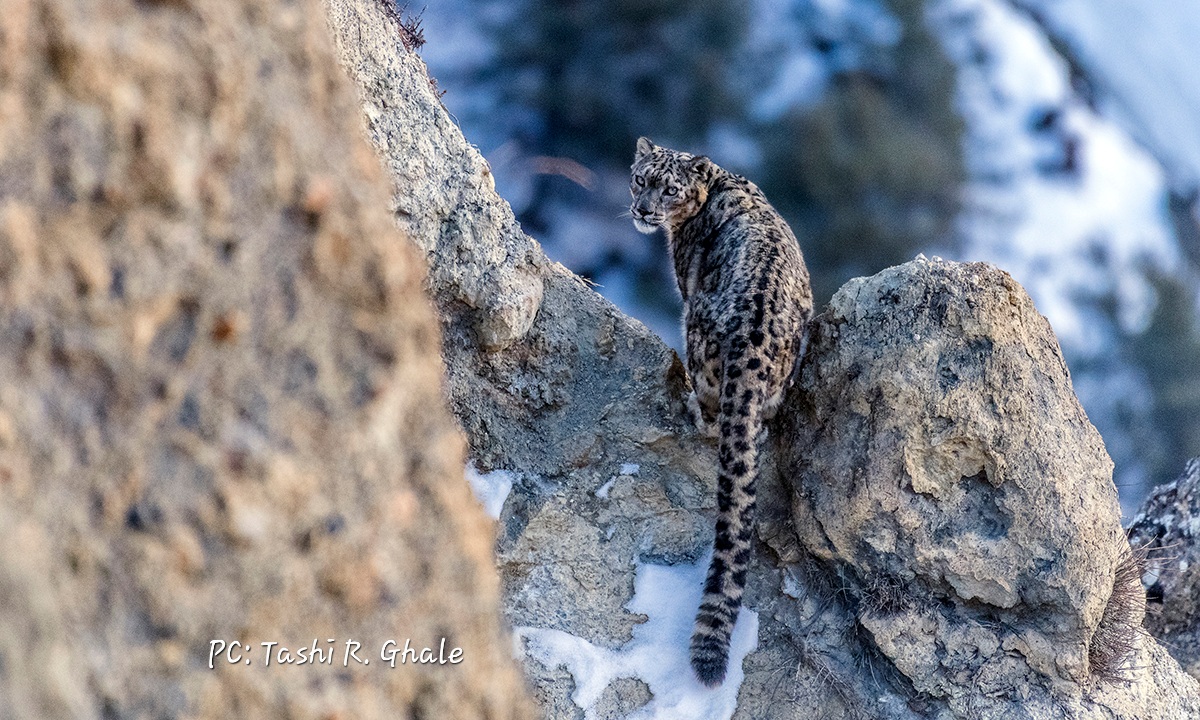
One of the most shying beautiful animals in the Himalayan region, smoky-gray colored, yellow furry body with dark grayish black stripes and spots, snow leopard is often found in the rugged terrain from Far western to eastern region of Nepal. Snow leopard’s weight is 35-40kg of female and 45-55kg male with about 1.8-2.3m length from head to tail and standing height 60cm. It has short and broad muzzle, short fore-limbs, long hind-limbs and long tail. Its long tail wraps the body and face for warmth and comfort and also helps in balancing on cliffs and rugged ground. January to March is mating time. Birthing time is spring or early summer. Cubs may spend their few weeks in hidden dens and crevices with mother and become independent in 1.5-2 years.
Generally snow leopard roams from 3000m to 6000m in rugged terrain but it depends on temperature, food availability and human flow. Except winter season while the snow level remains high and temperature is comfortable, human flow is high in the Himalaya region with lots of activities like trekking, mountaineering, sheep/yak/.. animal herding, herb collecting, so snow leopard roams higher part of the Himalaya above 4500m. During winter season from December to March, snow level comes down to 3000m to 2500m then most of the high Himalayan animals drop down to the snowline area and it also drops in lower elevation around 3000m. So, the winter is good timing to see snow leopard in much lower elevation with less time, low cost and no major issue of altitude sickness. However we organize the trip all year round and even in higher elevation.
Till 2016, it was considered the most endangered animal but as per the telemetry data recorded by World Wildlife Fund (WWF), its number is increased here in Nepal from 350 to 500 recently so then it is no more endangered species. Due to extreme hard life in the high Himalaya region, rich locals migrated to bigger cities and poor locals and nomads keep good number of sheep, goats, horses and yak calves for their livelihood. Along with the wild prey, snow leopard gets good amount of food easily with no disturbance. Awareness programs, community managed livestock insurance program, improve herding system, cage improvements, community based snow leopard inspection system are some examples for the snow leopards conservation. So it may be the cause of its increment. Blue sheep, Himalayan Tahr, musk deer, goat, horse are its regular diet found in the area. As per the research conducted in Dhorpatan Hunting Reserve just west of Dhaulagiri Himal (2018), snow leopard scat samples contained the fur of pika (Himalayan mouse 28%), blue sheep (20%), wild boar (16%), Himalayan Tahr(12%), Goral, goat (3%), musk deer (3%), horse (2%), vegetation (3%), birds (1%), non-food items (sand, grass, 10%) and unknown (2%). An average density of global snow leopard record is 0.9-1.8 per 100sq.km but in Nepal about 10 snow leopard per 100sq.km. High mountain locals lose their sheep, goat, horse and even yaks every year by snow leopard but it is hardly seen. So, the mountain locals call it ‘Himalayan Ghost’. There is no any record to attack people so far. There is no specific region wise numerical record of snow leopard.
Api Nampa Conservation in Far West Nepal, Limi, Changla, Mangri and Langu Vijer valley in Karnali region, Sundaha, Dogari, Seng and Ghustung block of Dhorpatan Hunting Reserve, Kobang, Chhusang, Ghami and Surkhang area of Mustang, Braga, Ghyaru, Letdar, Nar Phu valley in Annapurna Conservation area, Manaslu Conservation area, Langtang National Park and Gauri Shankar Conservation area in central Nepal and Kanchenjungha Conservation area in Far eastern Nepal and the large area in the Himalayan region besides the protected areas are typical harboring area for snow leopard. Due to difficult access in remote areas of east and Far west Nepal, most of the researchers focused their study in central Nepal Himalaya for easy access, economical and short duration. It is mostly explored in upper Dolpo, Dhorpatan Hunting Reserve, Annapurna, Manaslu and Gauri Shankar Conservation area and the Langtang National Park. It is said that there is higher number of snow leopard in Dolpo, so WWF and some nature based academic institutions visit the area in bigger groups but due to issue of cost and long duration, smaller groups focus Dhorpatan Hunting Reserve, Annapurna Conservation Area and Langtang National Park.
As per the research study conducted by Nepali and US scientists (Tribhuvan University and University of Washington), is confirmed that there are at least 10 snow leopards in Langtang National Park. A NGO in collaboration with Annapurna Conservation area had recorded 17 snow leopards in Mustang (2016) but there is no exact record of leopard in Dhorpatan and other areas.
Manang Valley
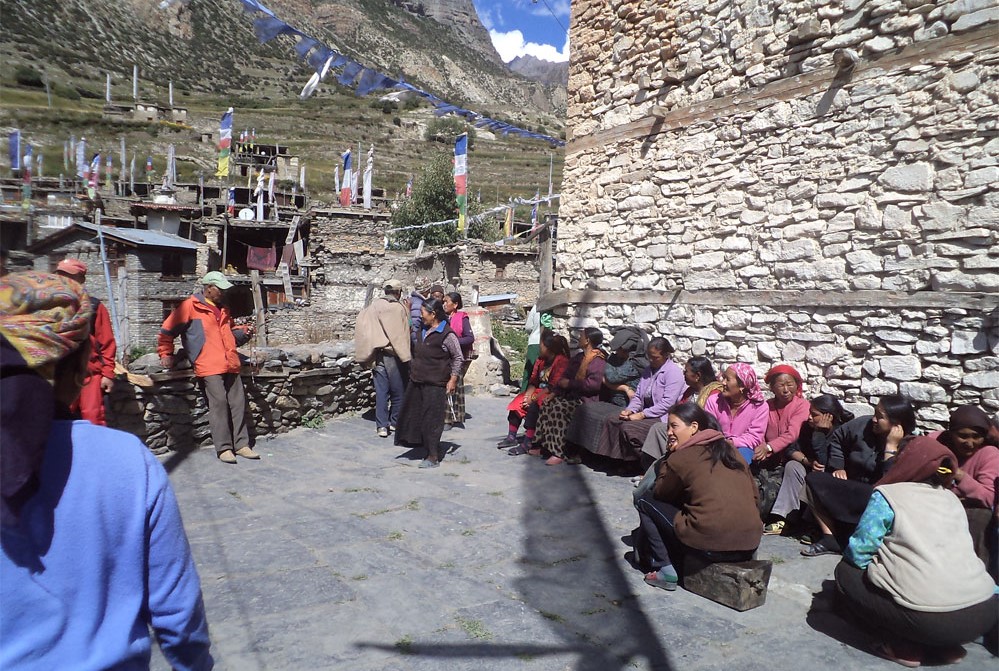
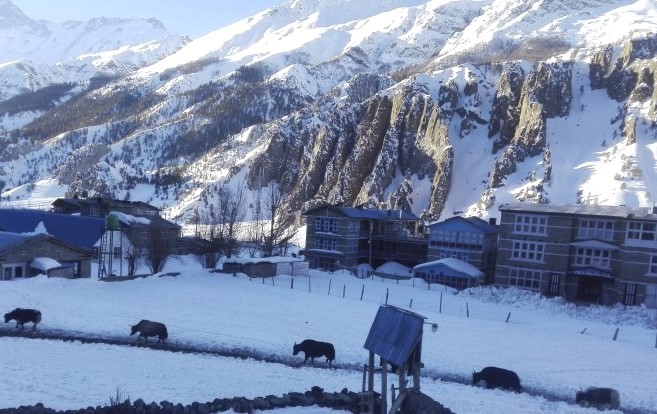
One of the most beautiful Himalayan valleys lying in Annapurna circuit trek, Manang valley is famous for Nisyangba Tibetan Gurung’s monastic culture, yak and horse grazing, Himalayan meadows, glacial lakes, isolated hidden glacial valleys, hanging glacier, sky soaring snowy peaks in Annapurna and Chulu range, rare type of concave rocky Sworgadwari ridge near Pisang, meandering Marsyangdi river, world’s highest located glacial lake Tilicho (4919m), holy caves, steep cliffs, blue sheep, snow leopard, common leopard, musk deer, Himalayan Tahr and mouse hare etc. Snow leopard roams here from 3000m Pisang valley to rocky cliffs over 5000m. During winter snow comes down to 2500m or lower and snow leopards also drop down to around 3000m. Sometimes there is early snowfall in November and sometimes starts in late December or January. Similarly snowfall may stop in early or late March. It is hard to predict the starting and ending time of winter snowfall but January and February lies in the mid-winter. Planning winter trip from Mid-December to March would be good. There is no major issue of high altitude during winter but concern is cold. Well heated warm dining hall gives comfort when staying at guest houses.
Things to carry for field trip
Enough thermal inner garments, warm jacket, wind/rainproof jacket, synthetic or waterproof track pants, sun/snow glasses, waterproof gloves, sturdy backpack with plastic or waterproof lining, good hiking boots fit for rugged terrain, snow shoes with good grips (for winter trip), moisturizer chap stick, camera/mobile/flash light/GPS with enough batteries or with solar chargeable folding device, binoculars, water bottle (especial one for winter in which water should not freeze), water purifier like chlorine or iodine (if cold water preferred for day hike), hiking poles, a whistle, polythene bags for wet clothes (during summer/winter), high altitude pills, skin cream, prescribed medicine and power bars (if particularly needed).
Experience required:
For winter trek: Walking in snow with crampon or good hiking boots and snow/cold resisting power
For regular trek: Walking on rugged terrain in high altitude and wind/cold resisting power
Possibility to see snow leopard:
There is no guaranty to see it. It depends on luck. Hope each of our guest is lucky to observe elusive Himalayan Ghost!








Destination
Activity
Start/End Point
Duration
Grade
Season
Group Size
Hotel/Accomdation
Highest Elevation