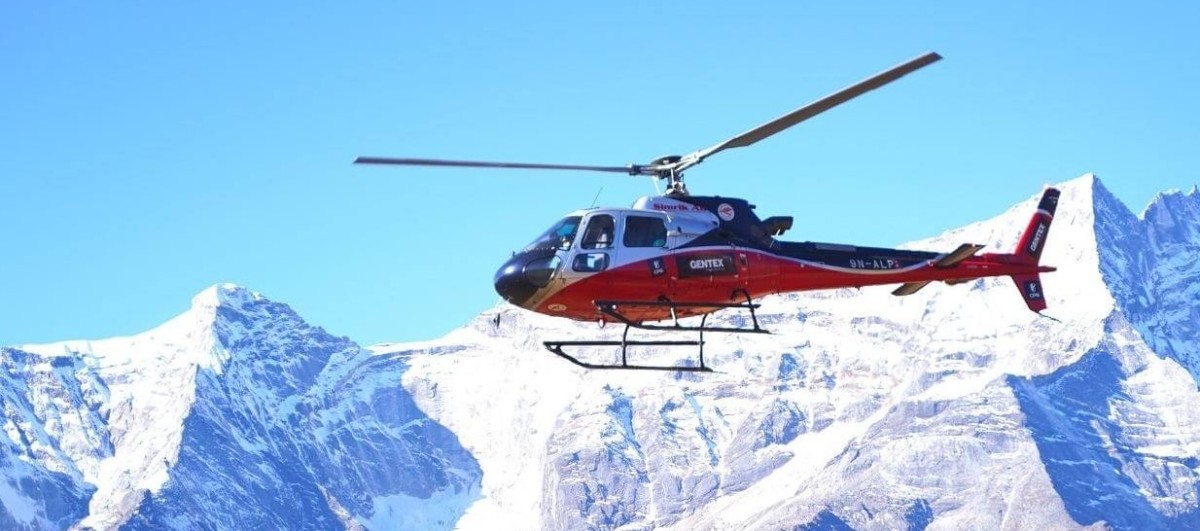
The mysterious region being hidden just behind the two giant Himalaya ranges Dhaulagiri and Annapurna, Royal Mustang forbidden kingdom has became arid where is just enough moisture instead of monsoon rain in summer. Due to the lack of monsoon rain, we can plan the tour for Mustang almost throughout the year. Monsoon is highly effective in the southern side of the Himalaya. Due to monsoon rain, there is chance of landslide disturbance in several places along the road to Jomsom. Similarly morning based plane flights for the sector are never reliable due to monsoon clouds. Helicopter flights considered reliable access for this sector during summer from June to August. Due to wind pressure, plane flights are always in the morning time only before 11am in this sector. Morning based plane flights are never reliable for this sector even other time of the year. Specially for summer we have designed this helicopter tour package which is slightly expensive but it is more reliable. If there is clouds in the sector, we wait till it opens thereafter we can fly with helicopters.
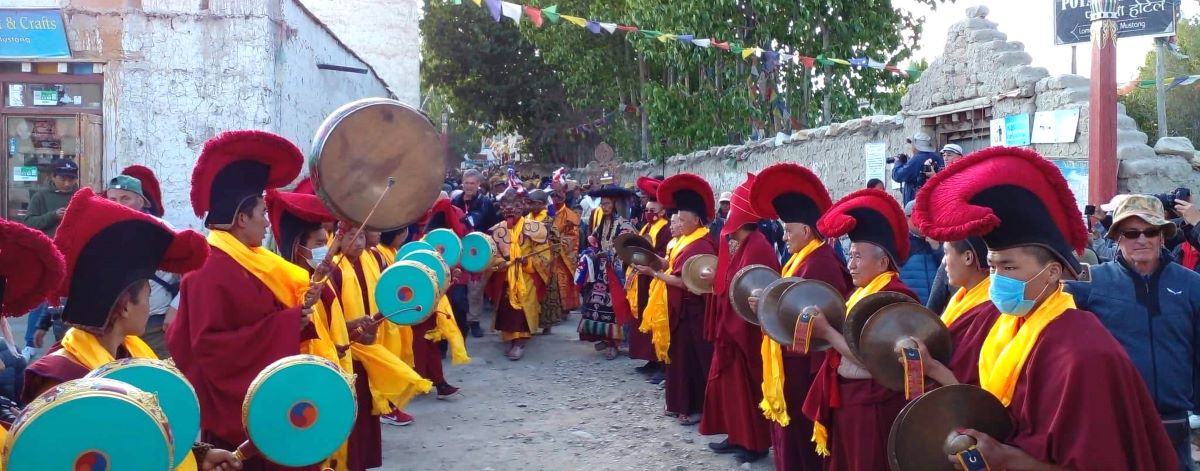
This tour is the combination of classic culture and typical lifestyle of Thakali, Gurung, Bhotia Gurung, Lo and Khampa tribes, trans-human nomadic tradition, bee-hive settlement system, traditional villages, ancient interesting colorful monasteries and chhortens, several interesting feasts and festivals like Yarthung - the horse race festival falls in August, Tiji festival falls one in May and other in June, holy Kaligandaki - the river of holy black fossils with mysterious colorful caves and colorful grand canyons, arid valley surrounded by the Himalayas, Muktinath - the lord of the liberation which is the combined temple of Hindu and Buddhist, nunneries and wonderful landscape as well as interesting monuments, lakes and beautiful valley of Pokhara.
Royal Mustang forbidden kingdom: Royal Mustang is a unique place of colorful caves, canyons, monasteries, chhortens, maniwalls, traditional villages of Lobas tribal people in the upper Kaligandaki arid valley and Bhotia Gurung and Thakali tribal people in lower Kaligandaki Thak Khola valley. Lo Manthang; one of the most interesting traditional villages in arid Kali Gandaki valley, lying just behind the Dhaulagri and Annapurna Himalaya, is the only one living walled city of Nepal guarded by armed policemen to defend the town from the enemies where the last (22nd) king of Mustang, Jhigmi Palber Bista ruled till 2010. With abolition of constitutional monarchy of Nepal by the public revolution 2007-2008, the new Constitution Assembly (CA) was formed in 2009 and CA decided to cart off even the monarchy in Mustang. Now officially, there is no more monarchy from 2010 but all locals in the entire Mustang kingdom are still following the tradition as well. Royal Mustang falls in extreme ecosystem zone. To protect beautiful artless culture and rare Himalaya flora and fauna, the Nepal government issues limited numbers of permits with special fee. Royal Mustang entry permit per person for 1st 10 days is US$500 (even for a single day, one must pay this minimum fee). The region also falls in Annapurna conservation area for which we should pay its entry fee in Kathmandu.
Pokhara valley: Pokhara valley is one of the most beautiful places of Nepal in terms of close view of majestic Himalayas, numerous lakes, hills and hillocks, mysterious caves, narrow river valleys, Hindu and Buddhist shrines, Gurung tribal culture, traditional villages, farmlands, starting and ending point of several trekking trips and lots of touristic activities.
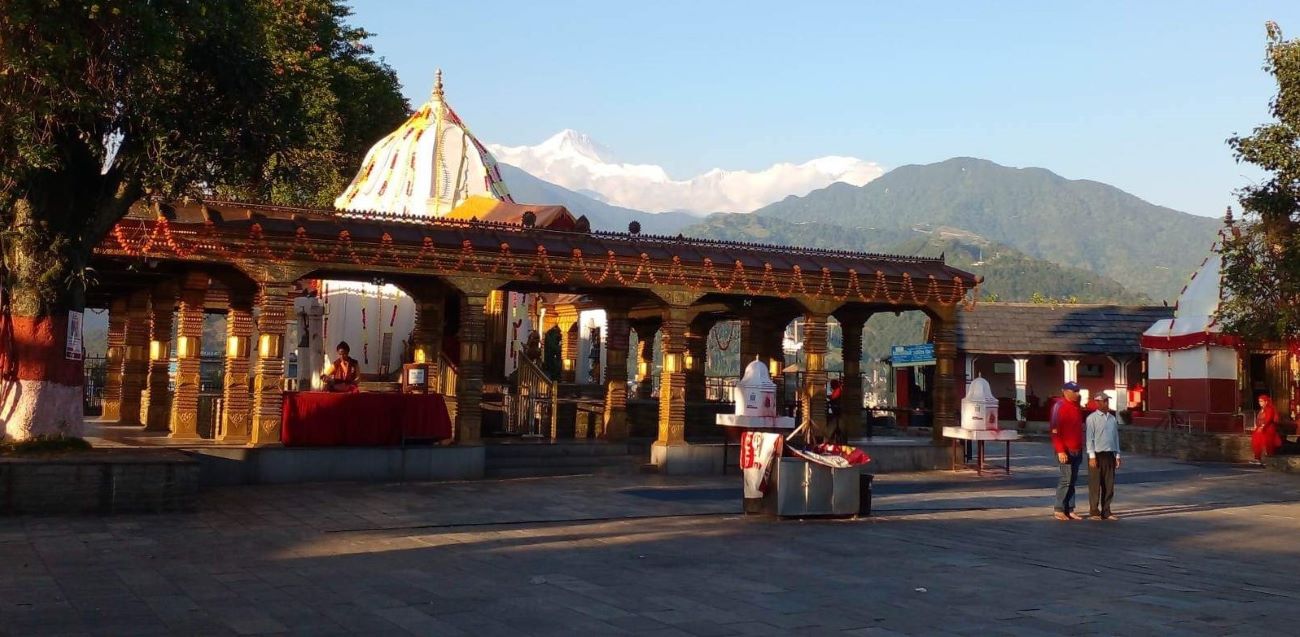
Bindhyabasini Temple of Goddess Parvati, Tal Barahi temple (temple of Astamatrika and Barahi Goddess) in the Fewa lake Island accessed by boating, World Peace Pagoda in the hilltop, boating in Fewa, Begnas and Rupa Lake, reflection of Machhapuchhre at Fewa Lake surface, sunrise scene from Sarankot, mysterious caves like Mahendra, Chamere and Gupteshwor, limestone waterfall Davi’s Falls, International Mountain museum, wonderful majestic view of Annapurna, Dhaulagiri and Manaslu ranges with numerous peaks, trekking to the foothill and Base Camp of Annapurna and Machhapuchhre Himal, Gurung village tour and lots of exciting touristic activities like paragliding, jeep lining, altra-light aircraft, bungee jumping are the key attraction of the Pokhara valley.
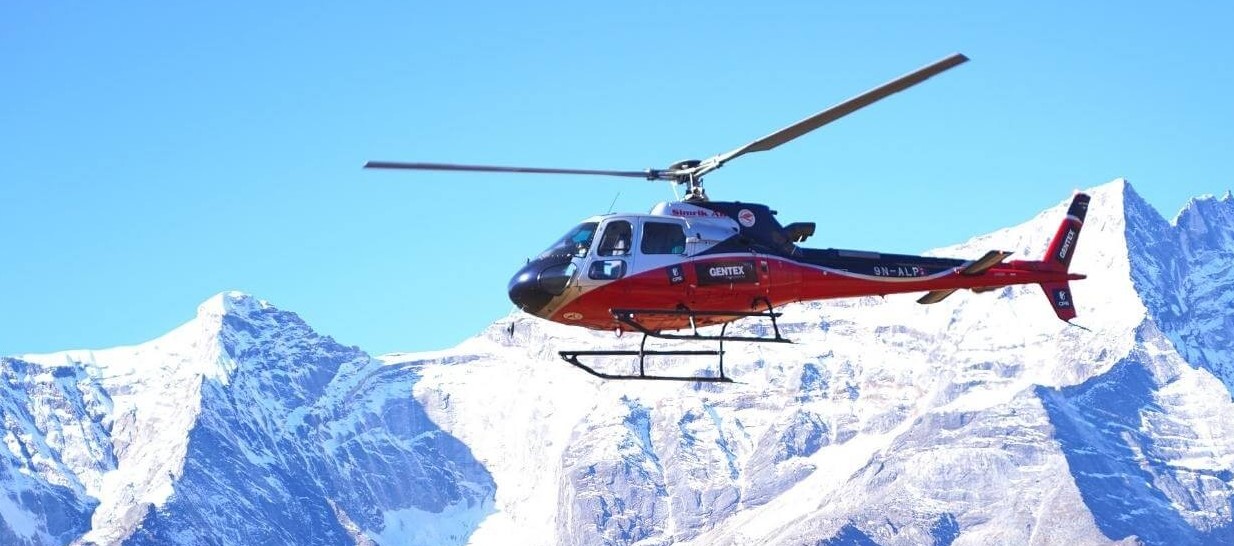
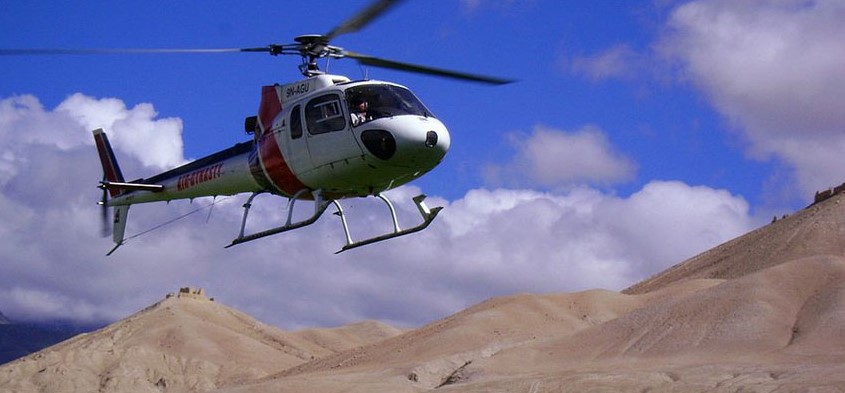
Pokhara-Jomsom sector helicopter flight through two giant Himalaya over 8000m, Annapurna and Dhaulagiri: Due to high wind pressure in Mustang, plane flights can not be operated here after 11am in all season. Sometimes, wind starts early in the morning and there is no flights for that day. Plane flights are frequently cancelled in summer (midJune - August) for Pokhara Jomsom sector due to monsoon clouds. Similarly, road and trekking trails in this sector are also often disturbed by landslides and flooding in this season. But helicopters can fly there in all season even with partial clouds. So, the helicopters are the reliable means of transport. On the other hand, with the permission, we can land helicopters beyond the airport. Even if we can not fly on the particular day due to dense clouds, we can fly the following day little farther to catch up our plan. So the helicopter are much suitable and reliable to access Jomsom/Kagbeni, the entry/exit point of the Mustang trips even in monsoon. We fly in and out Mustang by helicopter and can conduct jeep tour or trekking there easily even in monsoon. Pokhara Jomsom sector helicopter flight through two giant Himalaya, Annapurna and Dhaulagiri is a fantastic lifetime memorable sightseeing tour of the wonderful landscape and beautiful settlements. We can do entire Mustang tour by helicopter in short period of time but to land the helicopter in restricted area above Kagbeni, we should take a security person from Jomsom and must get special permission for helicopter landing with extra cost.
Except the monsoon, helicopter trips are ideal for wonderful panoramic view, photography, aerial photography, filming, topographic mapping, landscape survey, adventure landscape experience in short period of time and emergency evacuation. March to May and September to December period of time is the best for panoramic flights, filming and photography, and landscape observation in the high mountain regions due to clear fine weather. But no any season is bad for helicopter flights in term of magical Himalaya region access and other missions.
Day 01: Arrive Pokhara, city sightseeing, hotel
Arrive Pokhara, transfer to hotel, depending on time, visit Davi’s Falls and World Peace Pagoda in the afternoon. We see interesting waterfalls into the potholes of limestone creek in Davi’s Falls that disappears under the ground. The waterfall is located at the lower end of the Phewa Lake. Magical view of Annapurna, Manaslu and Dhaulagiri ranges, Phewa Lake, beautiful Pokhara valley, interesting mountain sequence is seen from the World Peace Pagoda. Return to hotel, dinner and overnight.
Day 02: Fly to Jomsom (2720m) by helicopter, Jomsom -Marpha - Jomsom - Kagbeni (2810m)
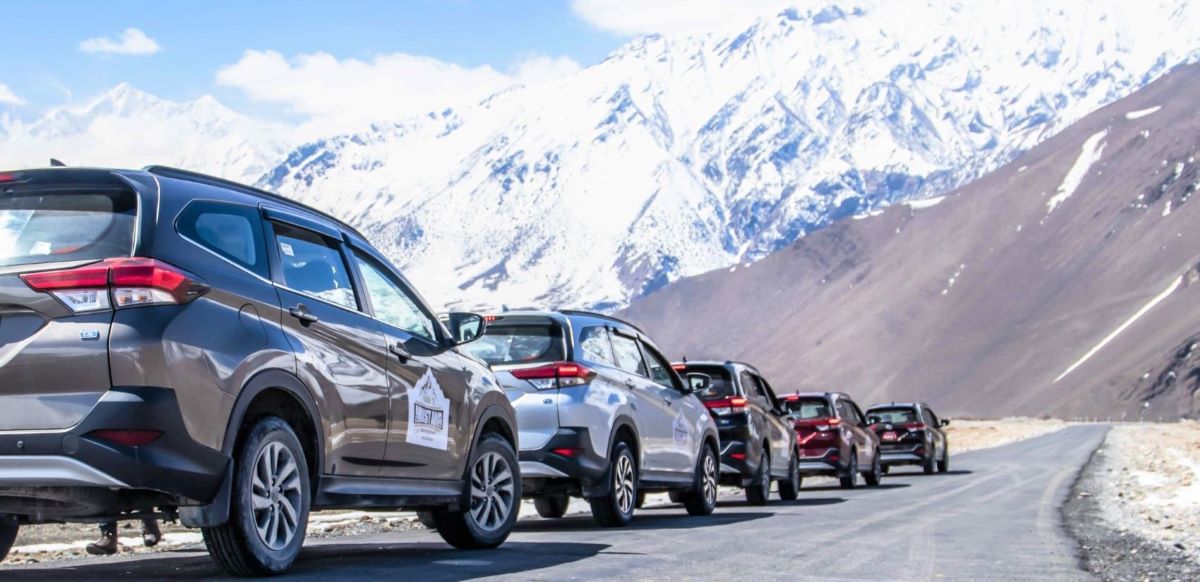
After breakfast, transfer to airport, fly to Jomsom. It is the scenic helicopter flight to Jomsom through 2 giant Himalayas (over 8000m) Annapurna and Dhaulagiri. Directly from the Jomsom airport, we will have excursion to the villages of Marpha, Tukuche and Kagbeni villages by private jeeps. First we start the village tour from Tukuche village, the lower point of the holy Kaligandaki valley. There are four monasteries and some beautiful merchant houses which have now been turned into lodges. The road passing through juniper forests through small villages with white painted houses. We drive along the Kaligandaki River considered sacred by the locals and often could see ceremonies of cremation. It is famous for its geographic peculiarity, which flows deepest valley in the world. Along its route, it passes between the Dhaulagiri (8167m) and Annapurna (8091m) mountains. Then we visit Marpha Gomba, Himalayan distillery in Marpha, observe apple orchard, beautiful farmlands, Dhaulagiri icefall and the lifestyle of Thakali tribal people.
Located at an altitude of 2,650 meters, the village of Marpha (mar means hard work and pha means people) is inhabited by the Thakali tribe, the hard working people. Most of the locals were engaged in the salt trade with China and Tibet before 1959. Nowadays, locals are mostly engaged in apple farming and tourism business. Marpha is now known as the "Village of Orchards". Its apples are known throughout the country for being particularly tasty. Even the brandy made from apples and apricots is famous. Marpha is also and above all a pretty village with traditional Thakali architecture with quaint houses and cobbled streets. It is dominated by the imposing Samtenling Monastery which contains images of Guru Rimpoche and Chenresig, as well as strange animal-headed deities. Depending on the time, we will have lunch in Marpha/Tukuche or Jomsom then drive to Kagbeni. Dinner and overnight.
Day 03: Kagbeni - Muktinath(3760m) - Chhusang(2980m)
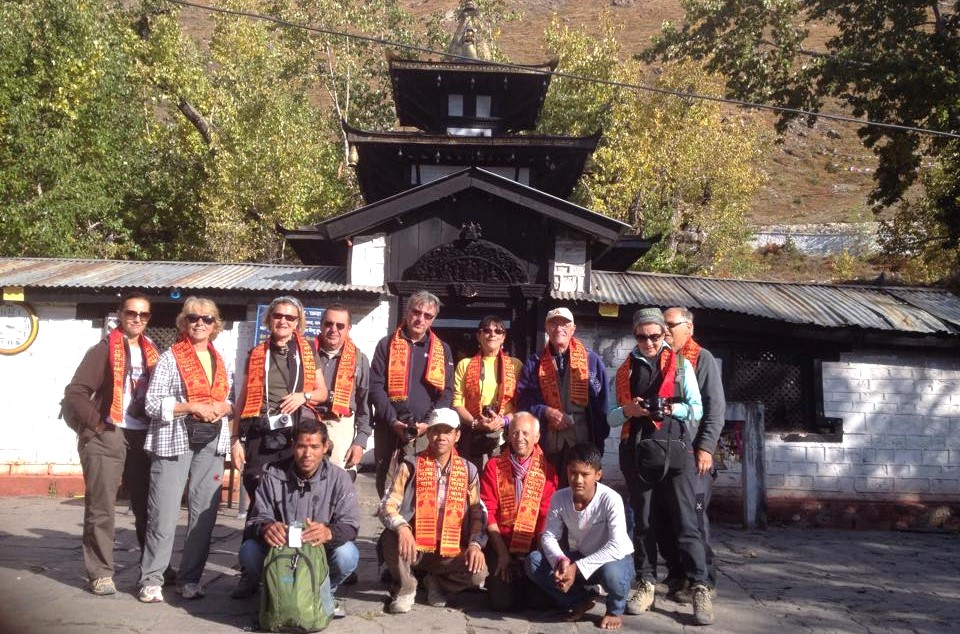
After having breakfast, drive towards Muktinath. From here it goes up to the valley of the east leading to "Jharkot", a beautiful traditional village with an interesting monastery. The landscape has changed and now the barren stony ground of the northern Mustang valleys is contrasted by the green of the Muktinah basin. The meaning of the two Sanskrit words from which the name Mukti-nath is formed is the Place of the Lord of Liberation, while in the Tibetan language it is called the Place of the Hundred Springs. Muktinath (3,810 m.), considered a sacred place even before the advent of Buddhism, is a very important religious center and pilgrimage destination for Hindus and Buddhists and a starting point for some Annapurna circuits. In Muktinath, there is a gompa, the temple of Vishnu and further down, in an old temple there is a sacred flame released by a natural gas. which we will visit on the way back, detaches from the one that continues along the river to Kagbeni. Visit the Muktinath temple, one of the most revered in the Himalayas; the view extends to the southwest the Dhaulagiri and Tukuche.
Return to Kagbeni, the Gate of the Forbidden Land, in fact, at the edge of the village the area that can be visited ends with the normal trekking permit. In the past, the village was probably thought of as a fortress to defend against the enemy, while today it offers a valid fortification against the force of the relentless wind that rises in the late morning of every day. The village is dominated by the Nilghiri massif (7061m) and in the distance you can see the colossus Thorong. Kagbeni, whose name means "at the confluence of two rivers", rises where the Jong Chu River, coming from Muktinath, flows into the Kali Gandaki River; at the top stands the squat and massive construction of the gompa (temple in Tibetan). A community of monks of the Sakya order lives in the monastery and, in fact, the characteristic gray stripes alternating with red stripes stand out on the external walls, a distinctive sign of this order (foreign visitors are not allowed inside the temple). The land around the village was reclaimed from the mountain through the work of man who created terraces where barley, potatoes and beans are grown. The inhabitants of this village belong to the Gurung ethnic group and their language is an intertwining between Tibetan and Nepalese. From Kagbeni begins the area for which it is necessary to have a special permit issued by the competent authority in Kathmandu which is obtained through local organization. The road begins to climb, until you reach a point from which, you can see Kagbeni behind us and the imposing Nilgiri as a background. The landscape is breathtaking. The river makes its way through the mountains creating a large bed. The river flows to our left and the path we follow, initially wide, then narrows and runs along the side of the mountain. Across the river, the village of Tiri Gaon surrounded by cultivated fields. The road, which in some points is narrow, is a continuous ups and downs and if you cross other caravans it is necessary to advance in alternating directions, as it is sometimes impossible for the animals with the load to proceed in both directions. The animals of the caravans advance in single file and are all harnessed: heavy cowbells around the neck, on the forehead a triangle of fabric woven like the typical Tibetan rugs that reproduce auspicious symbols or other symbols of Buddhist iconography; row leaders sport white and red yak tail plumes; the wooden saddles rest on two carpets.
Drive along the valley by jeep towards Chhusang. The first village we will encounter in the village of Tangbe (3060 meters), surrounded black, red and white typical of this area of Mustang and Sakya sect chorten. You reach a small plateau from which you can admire the Kali Gandaki river at the point where it receives the waters of the Ghilungpa Khola (khola in Nepali means small river). At the top on the left you can see the path that comes from Dolpo, while other paths drawn on the sides of the mountain by men and animals lead to the summer pastures for the yaks. In view of the village of Tangbe (3060m), the road descends towards the river and then climbs towards the first houses of the village. We can also observe interesting sand bars, caves, canyons and apple orchard here. As Kagbeni and other places too, Tangbe is a maze of narrow alleys between whitewashed houses surrounded buckwheat, barley, wheat and apple orchards. You can't help but try to immortalize what you see: below us the ground forms natural buttresses called sandbar. We arrive at Tangbe, an ancient fortress village, with its very narrow paths that run between the high walls of the buildings and on which small windows bordered by a thick strip of red open. Tangbe is a pretty village, now inhabited by a few people of the Tagbeni Gurung ethnic group. The current village is not the original one that stood further down but which has slipped downstream due to a landslide.
Leaving Tangbe, you will soon reach Chhusang village. A village that juts out over the Kali Gandaki river, while around it is surrounded by a scenery of colorful rocks. Scattered among the rocks, countless caves, a reminder of an eventful past and today almost all of them inaccessible; in ancient times they were homes, shelters for caravans and pilgrims, but also hermitages for monks and ascetics. Still of Gurung ethnicity, in Chhusang people understand and also speak the Tibetan language, we are, in fact, at the crossroads between two worlds, the Nepalese one we are leaving to enter an intact corner of Tibet. On the bed of rivers and streams it is relatively easy to find the saligrams (fossils of black ammonite) that the locals collect to sell to foreigners (the Nepalese administration prohibits their purchase and at Jomsom airport those found in possession of them risk hefty fines). Countless chorten (in Tibetan reliquary and three-dimensional representation of the Buddhist universe) scattered around the environment. Overnight and overnight.
Day 04: Drive: - Samar(3660m)-Yamdo La(3860m)- Geling (3570m)-Nya La(4010m) - Ghami (3520m) - Dhakmar (3700m) - Mui La (4170m) - Ghar Gompa (3940m) - Tsarang (3570m), about 46km, approx. 6-7 hour
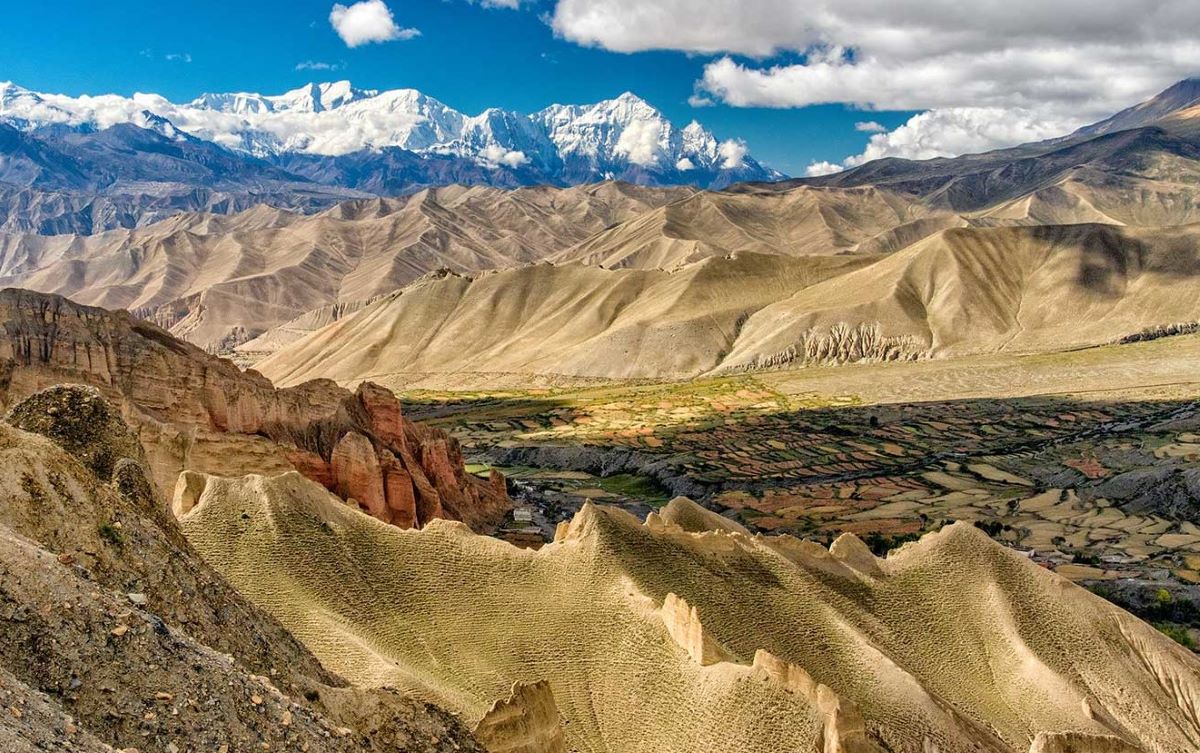
Have breakfast, then drive to the Kaligandaki River canyon where we see mysterious caves overhanging in the red cliff. Now we start climbing the hill of Chele village located in the sandy ridgeline, from where we can observe spectacular scenery of Nilgiri mountain in Annapurna massif, beautiful water channels of Kaligandaki River and colorful grand canyons. We will meet in front numerous hidden in the red rock quarries, which by erosion caused by wind and assumes forms very peculiar. Observe traditional village and typical lifestyle of mountain locals. The village of Chele (3050m) is perched on top of a steep and dusty climb. On reaching the gates of the village, one last look at Chhusang immersed in a splendid panorama. Drive continue to the hill saddle from where you can see wonderful Himalaya panorama and Kaligandai valley.
We continue ascent to Samar village (3660m), surrounded by forests of poplars and junipers. Trees and water characterize the entrance to the Samar village. Doors and portals of the houses are adorned with a goat's skull, placed to protect deceased people who do not want to leave the places where they lived and which is the same type of protection that is given by the chorten that surround the town. From the top where the king's castle stood, with the clear sky, from right to left stand out the Nilghiri (7061m), Tilicho (7136m) and Thorang (6482m). The Samar area has been an integral part of Mustang for about 100 years: it was once a small fiefdom ruled by a local king. Leaving the Samar village, continue until you reach a crossroads, on the left the caravan road leads easily, through Beza La (3720m) and Yamdo La (3760m) to Syangboche (3800m). On the right, descends again and climbs with difficulty, until you reach the modest pass on which prayer flags wave. Around us stand the peaks of Nilghiri, Damodar, the Dhaulagiri and Tharong ranges and below us the canyons of the Kali Gandaki river. The Himalayan flora is interesting and with a little luck you can spot partridges and eagles.
After the small pass, we proceed beyond the massive and ancient chhorten that dominates the valley and in front of us opens up a space that seems to have no boundaries: everything is white, the rock, the sand. In this monocolor immensity, the verdant plain of the village of Ghelling (3570m) clearly stands out, where the road then climbs between the fields in the center of the valley, passing through the village of Tama Gaon and reaching the Nyi La pass (3990m). From this point, when the sky is clear, you can admire the Annapurna Nilgiri range in all its splendor. Descend towards the village of Ghami (3520m). The village is surrounded by imposing rocky mountains, with soft and sinuous profiles, which look like a painter's palette, so many are the colors that can be seen there. The town emerges from the green of the crops.
Descend to Ghami River through Ghami village then drive to the longest mani wall in Mustang; which is considered the intestine of demon thrown by Guru Rimoche from Lo Ghekar. Drive to Dhakmar village through horse/yak/dzopa grazing beautiful pastureland, river valley and willow trees in the lap of red canyons and mysterious caves overhanging in the red cliff. It is also believed that the cliff turned red with splashing the blood of demon while throwing its intestine by Guru Ripoche. Occasionally blue sheep and snow leopard are seen in the valley.
Drive continue to Ghar Gompa via Mui La (4170m- the highest point of the tour). We see beautiful valley of Tsarang, Marang and Ghar Gompa where we also see hanging cliffs and rocky mountain on the left side. Ghar Gompa located at the base of rocky cliff, is the oldest monastery in the entire Himalaya region built by Guru Rimpoche (Padmasambhawa) said to be built up in 8th century that follows the Nyingma sect of Buddhism. There are red chhortens, prayer flags, monks shelters. We see wonderful scenery of Damodar Himal, Thorang and part of Annapurna range from there.
Descend to Tsarang through Lo Gekar Marang valley, a major center of Mustang, where there are colorful monastery, nunnery and an mud-built old royal palace. This town is a maze of fields, willows and houses separated by stone walls at the top of the Grand Canyon Charang Chu. Red Gompa (Buddhist temple) that we find here has a beautiful series of statues and Thankas and large paintings depicting the seated Buddhas. Dinner and overnight at Guest house.
Day 05: Drive: Tsarang - Lo Manthang (3810m), explore Lomanthang in the afternoon, 13km, approx. 1 hour
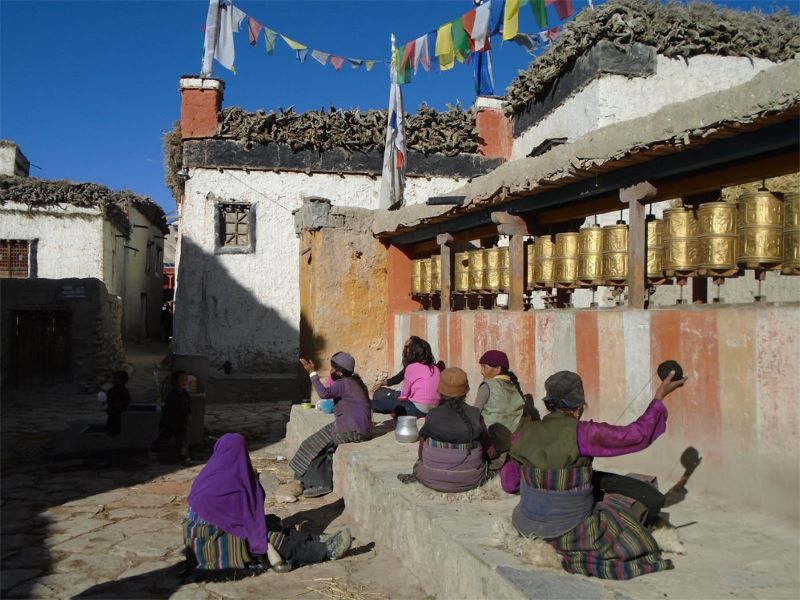
After breakfast, we explore beautiful village and interesting culture and lifestyle. First we visit colorful monastery and chhortens along the top of the canyons then interesting mud-built old royal palace. We may also visit nunnery in the village. After exploring the village drive down to Tsarang Khola stream, cross it then climb up to the plateau of Lo-Manthang, an ancient capital of the Kingdom of Mustang, a fairytale city set in a plateau surrounded by eroded rocks. We begin the exploration of this beautiful place; within the walls. There are some ancient monasteries of the Sakya school with interesting frescoes, the Royal Palace and the square. Walking through the lanes it feels timeless, meeting smiling people engaged in their traditional activities. First we check in hotel, have lunch.
The afternoon is dedicated the visit of Lo-Manthang and its monasteries. The Manthang, the capital of Lo, is a rich city whose prosperity is the result of trade in wool and salt from Tibet. It was founded in 1450 by the son of the legendary Ame Pal, who unified the small kingdoms of upper Mustang. The wall with an "L", 300 meters long and 1.50 meters wide, has protected the city from bandits for hundreds of years and archaeologists say their community remained isolated for over 500 years. The surrounding vegetation produce a crop of wheat, buckwheat, barley, peas, potato and mustard. Visit the Tall Champa Lakhang (house of God), red Gompa Thugchen, the Gompa Chyodi and the Kings Palace enjoying the panoramic view of the plateau of Tibetan savoury village and the Himalayan mountain range. Dinner and overnight.
Day 06: Explore Nomad camps and Lomanthang
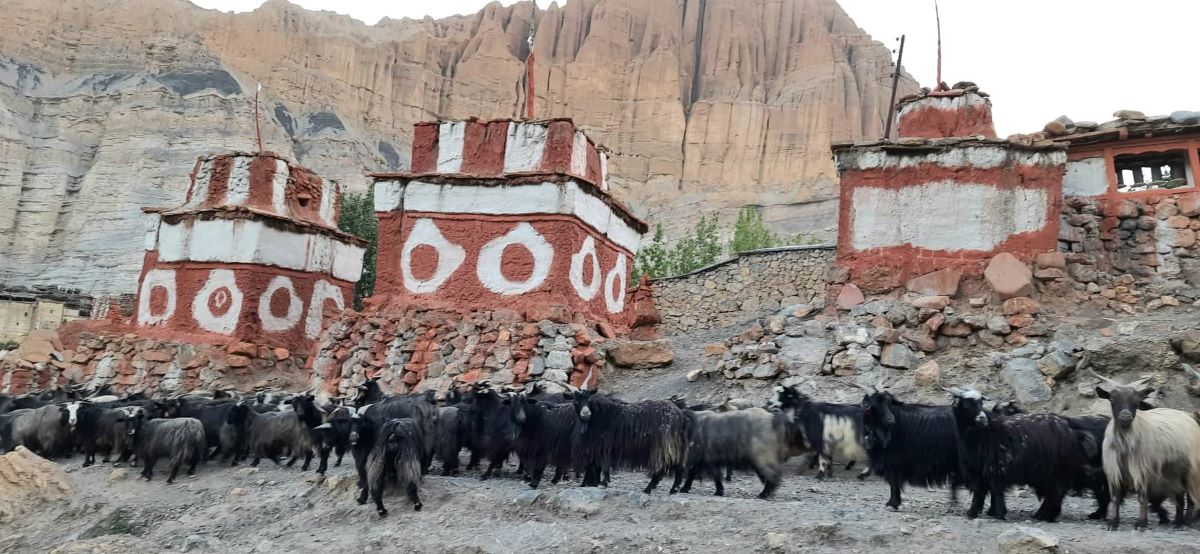
After having tea/coffee, visit nomad camp to experience nomadic tradition where you see typical lifestyle of nomads, herds of yaks, sheep and mountain goats. Tibetan Khampa tribe with their livestock roam in the arid thorny barren lands all year round. It is interesting to observe their typical lifestyle and pastoralism. We also see furry mountain dogs guarding the camp as well as the animals. Herds of yaks, sheep and mountain goats with guarding dogs leave camp in the morning for grazing in high mountain and return in the late evening. Old people with their tiny children, baby sheep, injured animals and a guarding dog stay in the camp all day. High mountain cliffs just above the camp are the shelter of leopards. If guarding dogs are not sufficient to take care of herds of yaks, sheep and goats, snow leopards hunt them in a big number. This camp move little higher in summer and moves lower during winter.
Return to the hotel, have breakfast, explore the ancient capital of the Kingdom of Mustang, a fairytale city set in a plateau surrounded by eroded rocks. We begin the exploration of this beautiful place; within the walls. There are some ancient monasteries of the Sakya school with interesting frescoes, the Royal Palace and the square. Walking through the lanes it feels timeless, meeting smiling people engaged in their traditional activities. We visit monasteries and explore monastic culture. Depending on the availability of time of royal family, we will visit royal family in the palace. Return to the hotel. Dinner and overnight.
Day 07: Explore Chhoser valley and Lomanthang
Morning excursion to the village of Achenbuk / Dzong which developed an entire culture within many caves. Descend initially to the river valley, we cross the river and then up. Before us stretches of cultivated fields. After the climb, the road becomes flat and behind us rise the tops that have accompanied us during our trip. You reach the valley Achenbuk (Chhosar), cut in half from the valley of Dzo. On the right lies the Garphu village, where many of the buildings are backed to the natural caves. On our left, after all, the village of the same name with Nyphu monastery leaning on the wall of the mountain and built partly own exploiting the natural cave that opens into it. The whole valley is a show for eyes: the cultivated fields, the farmers who cut the wheat, grazing cows and horses, the sandstone mountains dotted with countless natural caves that man has adapted to its uses and surrounding small villages. We visit a 5 storey mysterious cave of 55 rooms which is believed over 2700 years old then we visit Nyphu monastery. We observe and explore the monastic culture in the cave villages. Return to Lomanthang, then Lomanthang tour. Dinner and overnight.
Day 08: Lo Manthang - Jomsom
After breakfast, drive back to Jomsom on the same way. It is about 60km distance with approximately 7-8 hour drive along mostly gravel road. We see non-stop scenery of majestic Nilgiri, Dhaulagiri, Damodar and Thorang Himal range as well as mysterious colorful caves and canyons along Kaligandaki River valley. Depending on time we may have lunch in Samar or Chhusang. Arrive Jomsom, check in hotel then time for relax. Today is the last day of driving tour in Mustang, so we release jeeps we used. Dinner and overnight.
Day 09: Fly back to Pokhara by helicopter, explore Pokhara, hotel
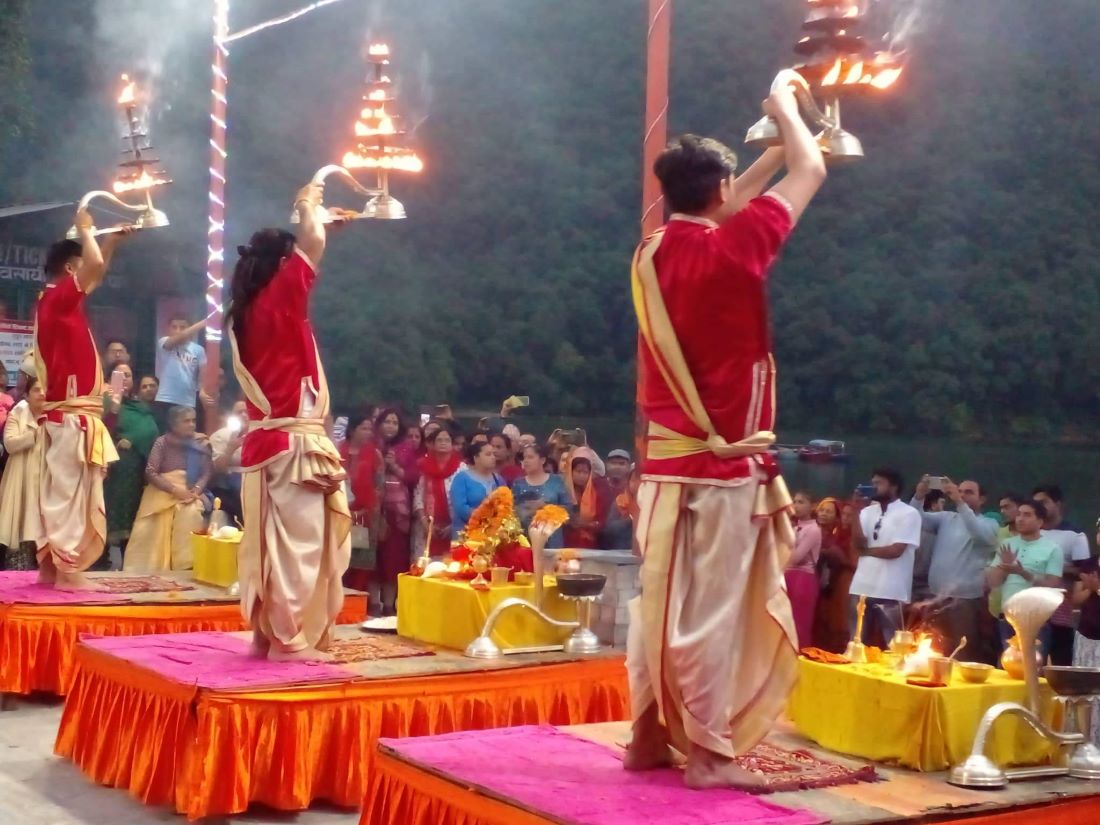
Have breakfast then fly to Pokhara by helicopter. The day is dedicated to visit World Peace Pagoda, Davi’s Falls, Mahendra cave and Phewa Lake. Depending on time, you may also visit Mountain museum. You see wonderful view of lakeside city Pokhara, Phewa Lake, the entire Pokhara valley and the magical Himalaya panorama from World Peace Pagoda. You see interesting waterfall-David Falls that disappears in limestone creek and flows under the ground. Have lunch then we also visit mysterious limestone cave where are see interesting natural idols and images in the cave. Visit Tal Barahi Island accessed by boating in Phewa Lake. You see the reflection of Fishtail mountain in the surface of the lake. Observe sacred oil lamps offering to the goddess in the evening. Return to the hotel. Dinner and overnight.
Day 10: Sightseeing and shopping in Pokhara, hotel
We have a spare day in Pokhara to explore Gurung tribal culture and shopping along the Phewa Lake shore. In case of late flight from Jomsom due to weather condition in the previous morning, we will have enough time to explore Pokhara valley today. Mainly today is the relax day after the field trip. Farewell dinner party at any Nepali folk dance restaurant. Overnight.
Day 11: Program over, fly back home.
After breakfast, program is over, transfer to airport, fly back home.
Tour cost per person (US$)
2pax group: $4,999
3pax group: $4,599
4-5pax grou $4,499
6-10pax group: $4,399
11-15pax group: $4,299
1pax complimentary for above 9 paid guests and above size group.
Mustang Permit fee included in above cost (it is mentioned here just to make you know the restricted area permit figure): Upper Mustang permit fee-: US$500 per person for 1st 10 days, thereafter $50 per day per person. Annapurna conservation Area Project (ACAP) and Trekker’s Information Management System (TIMS) permits per person: $50 for the trip.
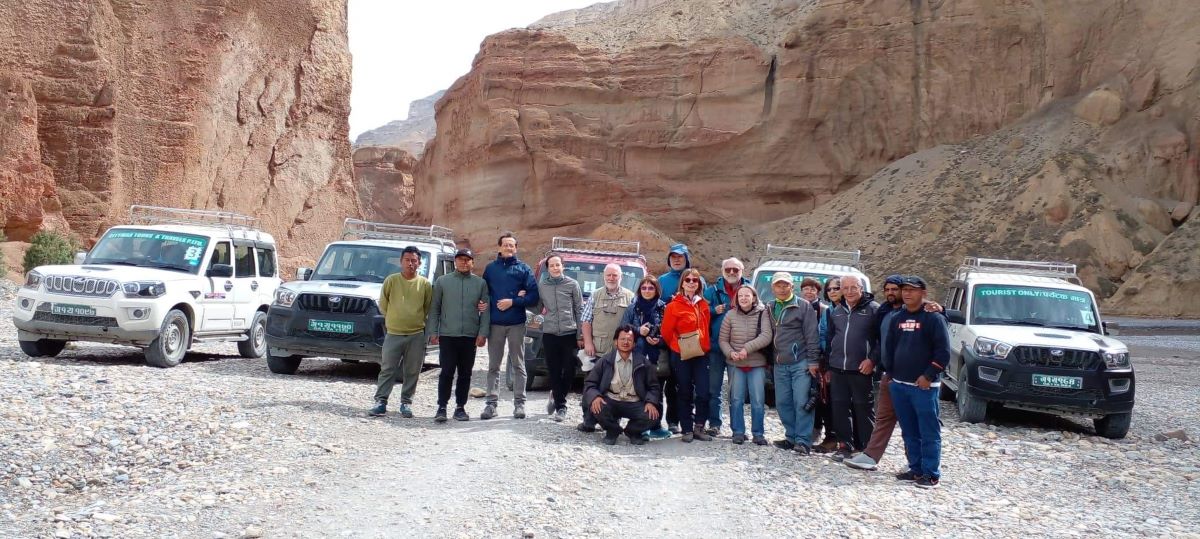
It includes: Mustang restricted area permit, ACAP permit, TIMS permit, monument sites and area entry permits for the entire trip, food (3 meals a day: breakfast, lunch and dinner), accommodation, English/other language speaking guide, surface transportation including private jeeps in Mustang, charter helicopter from Pokhara to Jomsom and back to Pokhara as per the itinerary.
It excludes: Nepal Visa, guests’ travel insurance, any kind of gift & donation, gratuity to the serving staff, cold drinks & alcoholic beverage, emergency evacuation, cost of personal nature and the cost not mentioned above.
Scenic helicopter flight with thrilling close scenery of giant Himalaya massifs (hundreds of sky soaring peaks in Dhaulagiri/Annapurna, Manaslu and Ganesh Himalaya ranges), colorful caves and canyons along Kaligandaki River valley in Mustang and deepest Kaligandaki gorge between Dhaulagiri and Annapurna ranges, Hindu/Buddhist culture, traditional villages and lifestyle of Thakali, Gurung and Lo tribes, colorful clay dung plastered traditional stupas and monasteries in Mustang, medieval era monument sites in Kathmandu.






Destination
Activity
Start/End Point
Duration
Grade
Season
Group Size
Hotel/Accomdation
Highest Elevation